Some of my favorite recipes have the fewest ingredients. When you use the right ingredients in the right way, you can create dishes that pack a punch without costing a fortune or requiring crazy prep. This recipe is perfect for a nice dinner party; it won’t break the bank and isn’t too time-consuming.
The first several times I made this dish, I prepared it in the oven on a roasting pan. While that method works well, I now prefer grilling the pork tenderloin. It’s all about personal preference, though. Don’t hesitate to try it both ways. The best way to enjoy cooking is to make it your own by experimenting with different techniques and ingredients. As I often say, you might fail, but you might also create something extraordinary. You’ll never know unless you step out of your comfort zone and try.
For this recipe, buy about three pounds of pork tenderloin, usually two tenderloins. This amount will feed six to eight people. Often, the silver skin is already removed, but if it’s not, you’ll need to take a knife and remove it.
The night before I cook this meal, I marinate the pork tenderloin. When marinating meat, it’s best to puncture it with a fork throughout. This allows the marinade to seep deep into the meat, giving it the best flavor.
The marinade is simple: one-fourth cup of bourbon, one-fourth cup of soy sauce, two tablespoons of brown sugar, one teaspoon of miso paste, and several cloves of garlic. Mix these ingredients in a gallon-sized zip-lock bag, then add the pork. Try to remove as much air from the bag as possible before sealing it. Place the bag in the refrigerator overnight. If you can, turn the bag a few times the next day to ensure even marination. If you can’t, it’s no big deal, but it does help.
I tend to be specific with my ingredients, but you can always use what you have on hand. For the bourbon, use whatever you or someone you know drinks, so it doesn’t go to waste. I prefer dark soy sauce, which you can find at Asian markets; it’s richer in flavor. If you have a wheat allergy, tamari sauce is a good alternative. It’s a byproduct of miso paste and uses rice instead of wheat, offering a similar flavor. I prefer dark brown sugar, but regular brown sugar works fine too. I love garlic, so I keep a large jar of minced garlic in the fridge and usually use heaping teaspoons instead of cloves.
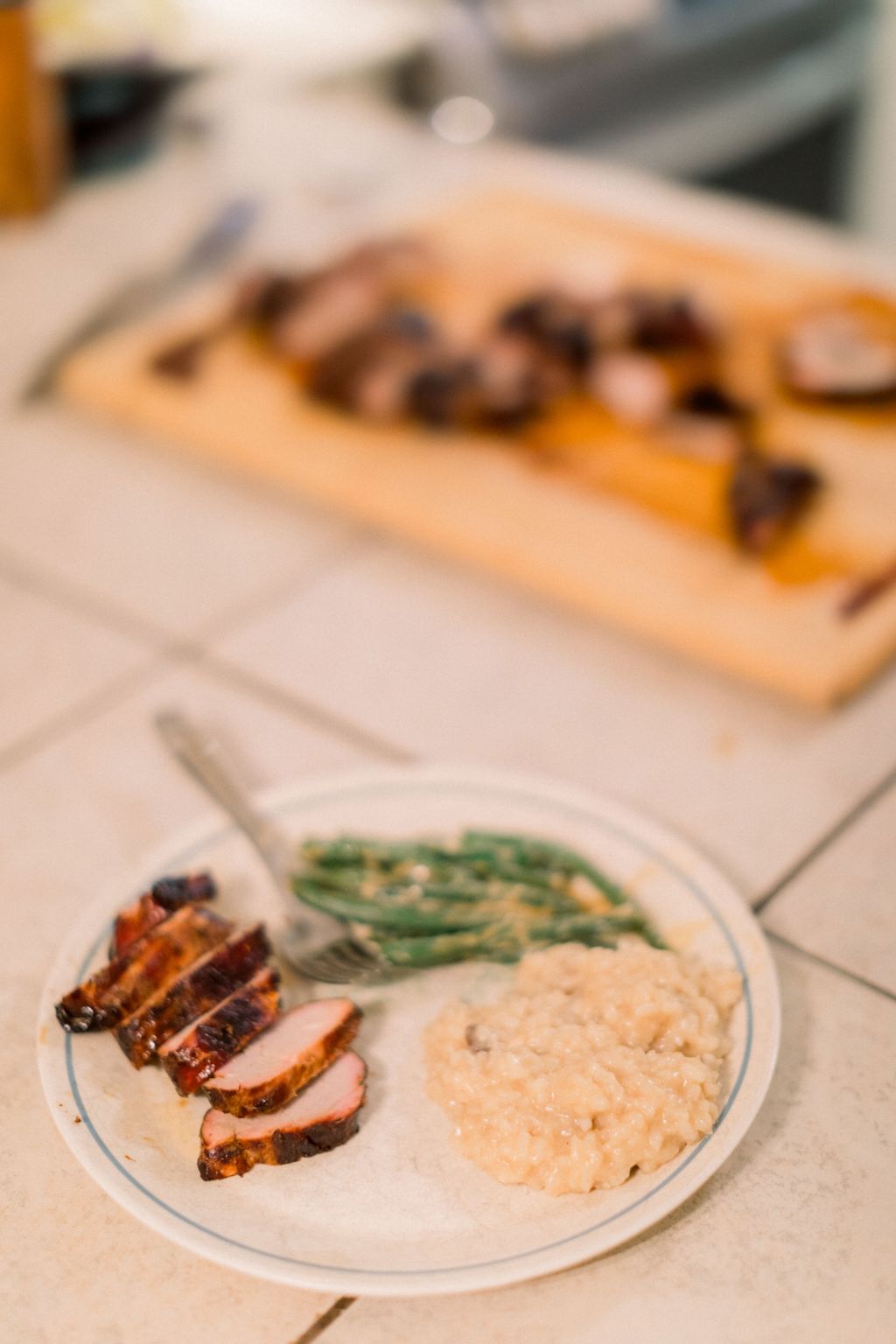
If you’re grilling, heat your grill to 325 degrees and place the pork tenderloins on the side opposite the coals for indirect heat. They need to cook for about 45 minutes or until they reach an internal temperature of 160 degrees. Let the pork rest for at least ten minutes before slicing. This pairs well with my miso-infused risotto, miso-infused green beans, or miso-maple roasted vegetables.
If you’re baking, cook the pork at 400 degrees for about an hour, ensuring it reaches 160 degrees. Again, let it rest for at least ten minutes before slicing. Regardless of your cooking method, you’re sure to enjoy a feast and impress almost any guest.

Asian Inspired Bourbon Pork Tenderloin
Ingredients
3 lbs pork tenderloin
1-2 heaping tsps. Garlic
2 tbsp. dark brown sugar
¼ cup of dark soy sauce
¼ cup of Bourbon
1 teaspoon of Miso Paste
Directions:
- The marinade needs to marinate overnight, so plan accordingly
- Make sure the silver skin is removed from the pork tenderloin. If not you need to remove it.
- In a gallon ziplock bag, put bourbon, soy sauce, brown sugar, garlic and miso paste and use a whisk to ensure that all the ingredients are thoroughly mixed. Place tenderloins in bag and try to get all the air out of the bag. Place the tenderloins in the fridge overnight, turning it every few hours to ensure the marinade gets on all sides.
- Heat grill to 325 degrees. Put pork tenderloin on the opposite side of the grill as the coals so that the pork is getting indirect heat. Cook for approximately 45 minutes or until the pork is 160 degrees.
- Allow the pork to rest for ten minutes before slicing.
- If cooking in the oven cook at 400 degrees for approximately one hour. Allow to rest for ten minutes before slicing.
 Grateful Grits
Leave a comment